
How can we stay healthy and productive at work?
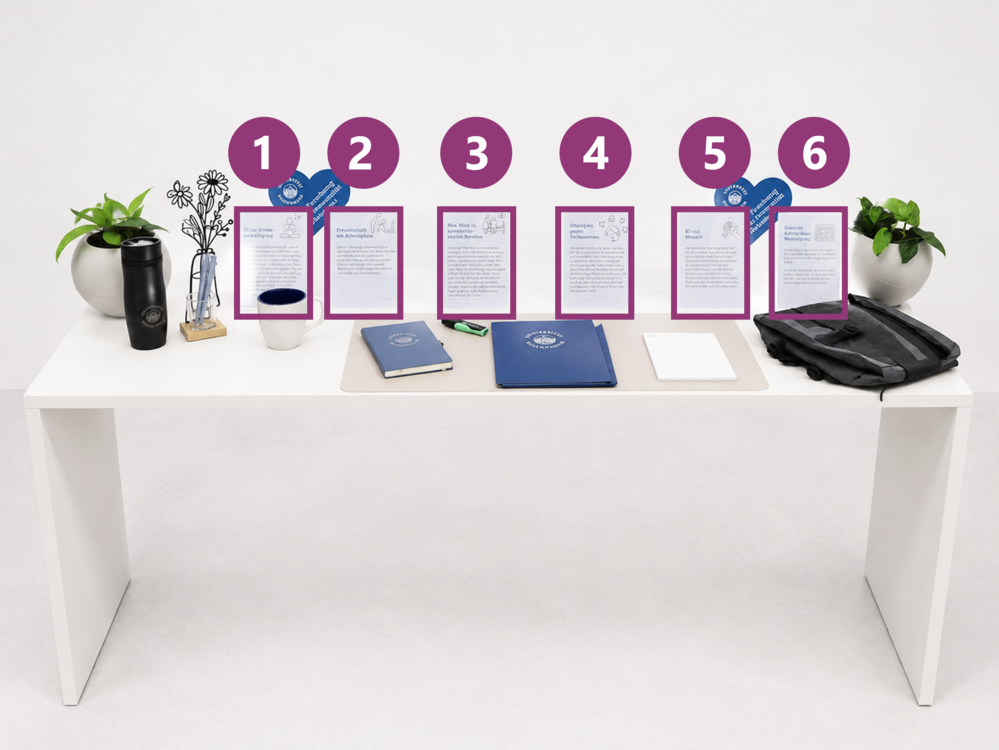
Our research examines how AI helps with stress management-and whether it supports people with strong social networks differently than those with little support. To this end, we are developing a customizable digital toolbox that can be used for training in virtual environments. The goal is not for AI to replace social relationships, but rather to complement them in targeted ways, thereby strengthening mental health and digital self-determination.
Our research builds on the often-romanticized concept of “friendship at work” to develop a practical management approach that improves the work environment, health, and productivity through a better understanding of social relationships.
In our research, we’re developing solutions to show how New Work can also function in professions that require on-site presence and are critical to the system. In this context, New Work doesn’t mean working from home or having complete freedom to manage one’s own time, but rather having more influence over how the work is done. This includes, for example, self-scheduled shifts, a say in decisions, respectful and appreciative leadership, and strong mutual support within the team.
Through our research, we help ensure that technostress prevention is effective and promotes health, accountability, and productivity. This is achieved through clear guidelines, training, and well-designed digital work environments that identify and reduce stress early on. Technostress can result, for example, from information overload, constant availability, or frequent changes to digital tools.
We are transforming the fear of an “AI takeover” into a constructive vision of the future, in which technologies support people rather than replace them. In sensitive fields such as healthcare and legal services, AI can take over standardized routine tasks, allowing doctors and lawyers to spend more time with their patients and clients.
Our research brings more variety from regional producers to the cafeteria, such as more locally grown legumes. We are also developing plant-based meals for patients with dysphagia. Since 15–18 million people in Germany eat in cafeterias and student dining halls every day, we want to help improve their well-being even further.