
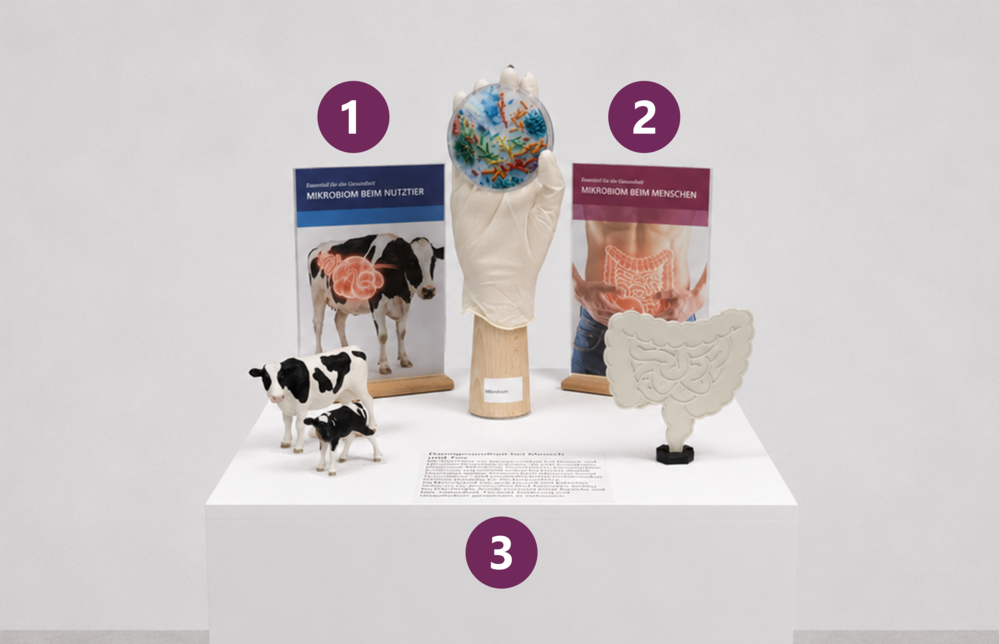
How does the Microbiome make People and Animals Healthier?
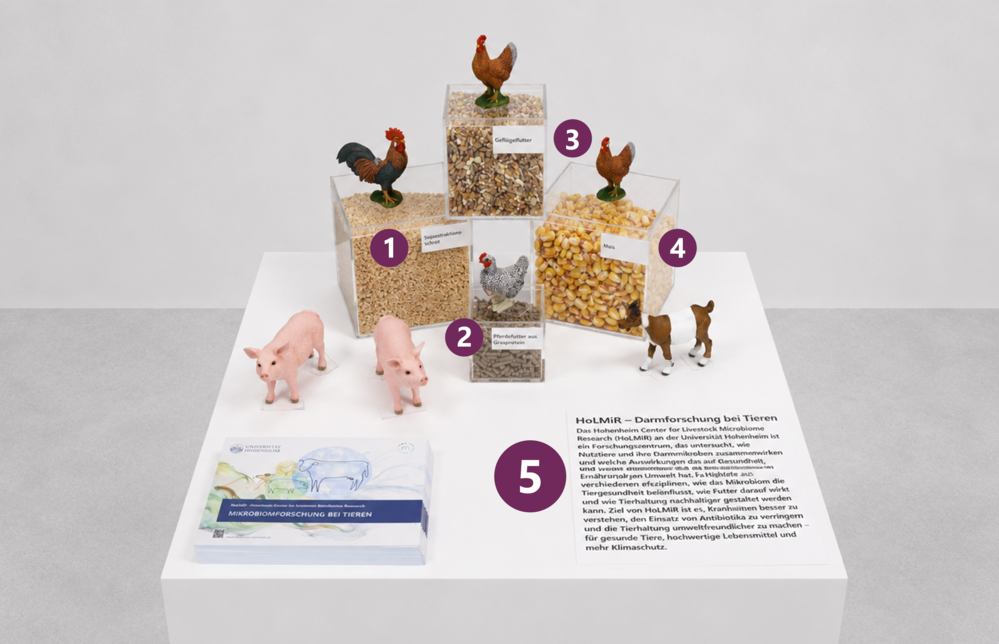
1. Soybean extraction meal
2. Poultry Feed
3. Corn
4. Horse Feed Made from Grass Protein
5. HoLMiR – Gut Research in Animals
The Hohenheim Center for Livestock Microbiome Research (HoLMiR) at the University of Hohenheim is a research center that investigates how farm animals and their gut microbes interact and what effects this has on health, nutrition, and the environment. In high-tech laboratories and animal facilities, experts from various disciplines investigate how the microbiome influences animal health, how feed affects it, and how animal husbandry can be made more sustainable. HoLMiR's goal is to better understand diseases, reduce the use of antibiotics, and make animal husbandry more environmentally friendly-for healthy animals, high-quality food, and greater climate protection.

"Gut health" isn't just about having normal test results; it's also about feeling good: no persistent pain, no frequent heartburn, and no chronic constipation or diarrhea that disrupts our daily lives or our quality of life.
A large part of our immune system is located in the intestinal wall. It must do two things at once: tolerate harmless substances (such as food and beneficial bacteria) and fight off actual pathogens. If this balance is disrupted, allergies, chronic inflammation, or autoimmune diseases can develop.
The intestines break down our food, mix it with digestive juices, and absorb water and nutrients. When this process works properly, the body is well nourished, and we usually have regular bowel movements without pain or severe diarrhea.
Special cells in the gut produce hormones that regulate hunger, satiety, blood sugar, and bowel movements. The gut is also in constant communication with the brain via nerves and neurotransmitters-stress can thus affect the gut, and conversely, an unhealthy gut can affect our mood.
Billions of microorganisms live in the gut; they help with digestion, break down nutrients, and produce substances that can have a positive effect on gut cells and the immune system. This balance is said to be disrupted when "dysbiosis" occurs; this is associated with gastrointestinal disorders as well as other diseases.
The intestinal wall acts like a finely tuned filter: it allows nutrients to pass through but blocks pathogens and toxins. This is achieved through a layer of mucus, tight junctions between cells, and defensive substances such as certain proteins and antibodies. If this barrier is disrupted, inflammation can occur, which is associated with various diseases.
An international panel of experts, which includes Prof. Stephan C. Bischoff of the University of Hohenheim, has developed the first standardized definition of "gut health." This definition takes into account not only laboratory test results but also personal well-being.
Gut health encompasses six areas:
- Good digestion and nutrient absorption,
- an intact intestinal barrier and defense system,
- a balanced microbiome,
- a functioning immune system,
- stable hormone and signal transmission to the brain, and
- subjective well-being.