
How can we create a future worth living through healthy eating and sustainable practices?

When starchy foods such as grains or potatoes are baked, fried, or deep-fried at high temperatures, acrylamide is formed—a substance considered to be a potential carcinogen. At the University of Hohenheim, researchers are investigating how acrylamide in grain and potato products can be reduced through the targeted use of enzymes and antioxidants without compromising the food’s taste or texture.
One approach, for example, examines how special plant-based ingredients such as potato flakes, carrot strips, olives, or fried onions, as well as technological adjustments—such as soaking ingredients—can further reduce acrylamide formation during the production of bread and baked goods. The resulting better understanding of ingredients, processes, and chemical reactions makes everyday snacks and baked goods healthier without consumers having to sacrifice taste.
Research:
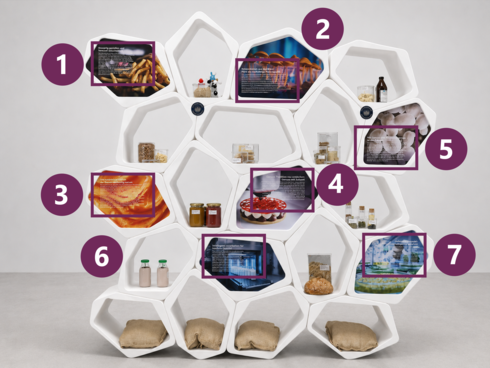
At the University of Hohenheim, researchers are developing innovative ways to make better use of plant-based raw materials and byproducts from food production. Using fungi and other microorganisms, they are creating new sources of protein and natural flavors for plant-based foods through fermentation. So-called basidiomycetes grow on by-products such as soy okara, a by-product of soy processing, and convert them into high-quality mycoproteins with high biological value and reduced allergenicity, as well as into flavor-enhancing compounds. At the same time, research is being conducted into how flavor molecules form and change in order to reduce undesirable flavors and specifically develop savory or cheese-like flavors for plant-based alternatives.
In this way, previously underutilized raw materials are transformed into tasty foods that conserve resources, reduce waste, and create new taste experiences.
Research:

The food of tomorrow should be healthy, resource-efficient, and diverse, yet still taste good. At the University of Hohenheim, researchers are actively advancing fermentation techniques to make food more sustainable, nutrient-rich, and of higher quality. Microorganisms such as lactic acid bacteria play a central role in this process: they transform raw materials in ways that create new properties, entirely without artificial additives.
One approach involves using bacteria that form natural thickening agents (so-called exopolysaccharides) in fruit preparations, thereby improving consistency and stability—for example, to ensure an even distribution of fruit pieces while maintaining high flavor quality and completely avoiding additives.
Further research ranges from the fermentative production of plant-based meat alternatives based on pea protein to the targeted enrichment of vitamin B12—a vitamin found primarily in animal-based foods—in plant-based foods. In this context, research consistently explores how fermentation processes can be better controlled and microorganisms deployed even more specifically to replace additives, enhance nutrients, and enable new food creations.
Research:

How can plant-based foods be designed so that they are not only sustainable and healthy, but also meet the taste and texture preferences of diverse target groups? Researchers at the University of Hohenheim are exploring new technological approaches to address this question.
Using 3D food printing, plant-based proteins are processed to form fibrous, meat-like structures. The goal is to replicate the complex texture of meat as realistically as possible, thereby increasing the acceptance of plant-based alternatives.
At the same time, this approach also enables the production of new plant-based menu items with high fiber content that are not only healthier but also impress in terms of taste and consistency. Especially when it comes to meeting the needs of people with swallowing disorders, new processes such as 3D food printing are key technologies for tailoring food to individual needs.
Research:
Food production of the future must be sustainable, efficient, and locally sourced. A key to achieving this is creating value from previously unused byproducts. At the University of Hohenheim, traditional craftsmanship is being combined with modern process science to make previously unused raw materials suitable for human consumption.
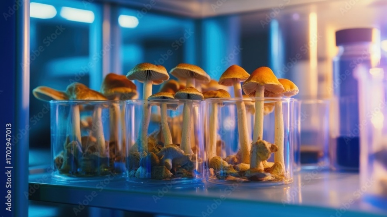
A particularly promising example is the extraction and processing of yeast proteins from brewing industry waste. The yeast protein, obtained through fractionation and modified by controlled fermentation, can thus be used as a functional ingredient in novel foods, such as vegan and vegetarian meat and cheese alternatives or as an egg substitute.
But even from stale baked goods that are no longer saleable—which are fermented into alcohol with the help of enzymes and yeasts and then distilled—food products such as bread brandy can still be obtained.
In this way, by-products are transformed into valuable, regional ingredients that sustainably support nutrition and strengthen the circular economy.
Research:
Many shelf-stable foods must be heated to high temperatures to ensure they are safe and can be stored for long periods, but this often compromises their taste and valuable nutrients. At the University of Hohenheim, we are developing new high-tech processes designed to solve this very problem.
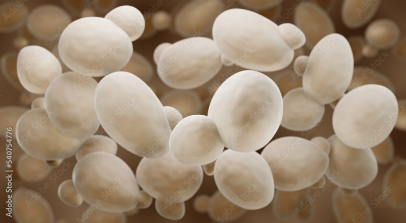
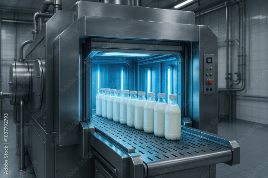
One approach: Liquid foods such as milk or plant-based drinks are no longer heated uniformly, but are treated differently in a targeted manner. While one portion is heated intensively to reliably destroy bacteria, the rest is processed more gently. This better preserves taste and quality while reducing unwanted changes.
Innovative processes are also being used for solid foods. For example, new systems use microwave extruders to continuously produce mozzarella and its plant-based alternatives, heating and shaping them evenly in the process. This enables gentler processing while also allowing for efficient production on a larger scale.
Research:
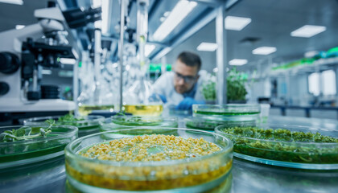
Proteins are a central component of our diet, yet their production poses major challenges for the environment and our resources. At the University of Hohenheim, we are working to make new protein sources not only more sustainable but also functionally effective.
One focus is on alternative proteins that generate fewer emissions, conserve water, and can be integrated into a circular economy. The goal is to holistically assess their production, use, and environmental impact, thereby creating a reliable foundation for the food of the future.
At the same time, food quality is a key concern: How can we replace properties that have been difficult to replicate until now? One example is gluten, which is crucial for the structure and bakeability of doughs.
New approaches combine plant proteins and natural dietary fibers using enzymes to form stable networks that can develop properties similar to gluten, thereby creating the foundation for foods that are environmentally friendly and of high quality.
Research:
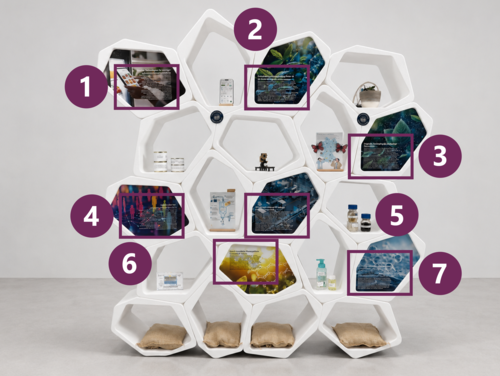
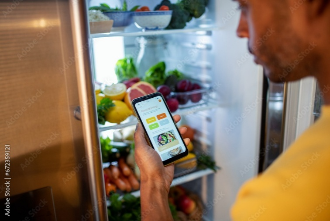
The journey from field to plate is a long one and still results in significant food loss throughout the entire value chain, both during production and at home. At the University of Hohenheim, this problem is being addressed with digital solutions that make supply chains smarter and reduce waste. Sensors collect data directly during production, while advanced analytical methods evaluate it in real time, enabling seamless traceability of goods flows. This allows critical changes, such as spoilage processes, to be detected early and food to be managed more effectively—for greater safety and efficiency throughout the entire chain.
At the same time, consumers are actively involved. Easy-to-use apps show how long food can be consumed even after the best-by date has passed. In this way, they help prevent unnecessary waste and conserve resources throughout the entire value chain.
Research:
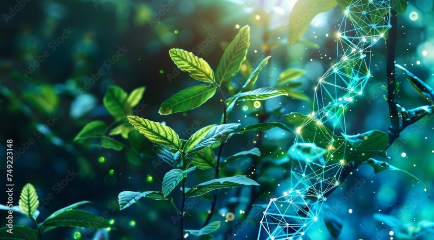
At the University of Hohenheim, researchers are investigating how to holistically assess the environmental impacts of bio-based products and production systems. Using life cycle assessments, they analyze all stages of the value chain. The goal is to create a sound basis for decision-making for a sustainable bioeconomy and to identify where bio-based products offer advantages over fossil-based alternatives and where conflicts of interest arise between climate protection, land use, and biodiversity.
In product development as well, sustainability criteria are taken into account early on throughout the entire life cycle in order to design products for circular systems and minimize environmental impacts. Closely linked to this is the design of sustainable value chains, which takes into account the interaction of all stakeholders, from agriculture to consumption. Regional cycles, cascade use, and the utilization of byproducts help to use resources more efficiently and reduce waste.
Research:

Researchers at the University of Hohenheim are developing digital tools to efficiently manage and protect natural systems. Sensors, the Internet of Things (IoT), cloud technologies, and artificial intelligence enable, for example, efficient, needs-based irrigation of urban trees and green spaces. Tested in collaboration with the City of Frankfurt am Main, researchers at Hohenheim are creating a field-tested solution that, as an open-source solution, can be scaled for use in other cities and municipalities. Digital methods also support the recording and monitoring of biodiversity. Automated identification, monitoring systems, and data analysis promote the protection of endangered species and make ecosystem research more efficient.
In the tropical wetlands of Central and East Africa, digital decision-making systems developed in Hohenheim help address complex ecological, social, and economic challenges. The combination of sensor technology, AI, data analysis, and transdisciplinary knowledge enables the sustainable use of resources, protects biodiversity, and strengthens the resilience of ecosystems.
Research:

At the University of Hohenheim, consumers are actively involved in research to better understand how sustainable, regional, and plant-based foods are perceived and what factors influence their acceptance. The goal is to identify which products, processes, and measures encourage purchasing decisions—from information resources to the design of retail environments. At the same time, researchers are examining the impacts of the shift from animal-based to plant-based alternatives on agriculture, production, and the environment.
Initial findings paint a nuanced yet generally positive picture: land is being used more efficiently, plant-based production systems are becoming more economically viable, and CO₂ emissions are declining—despite the additional energy required for processing. By combining consumer research, data-driven analysis, and practical interventions, a holistic view of food systems emerges. This makes it clear how food systems can be designed to be more sustainable, healthier, and socially effective.
Research:

At the University of Hohenheim, researchers are combining artificial intelligence with in-depth expert knowledge to ensure food quality throughout the entire production line. Digital models detect deviations early on and enable rapid intervention to maintain consistently high product quality. This approach is being tested on fermented and shelf-stable foods, among other products.
At the same time, AI-powered cameras inspect products in real time directly on the production line. Defects are detected immediately, reducing the workload on employees and ensuring product quality. This is complemented by hybrid digital twins that combine physical models with machine learning. They continuously learn from production data, compensate for fluctuations, and identify anomalies. This enables new products to be manufactured successfully from the very beginning.
Contemporaneous the models remain transparent to specialists and can be applied to other facilities and product variants. The combination of artificial intelligence, data, and expertise makes food production more efficient, safer, and consistent in quality.
Research:
Can sunlight be used to directly convert wastewater and waste into usable energy sources and chemical raw materials? It’s possible, thanks to artificial photosynthesis. At the University of Hohenheim, researchers are using tiny molecular catalysts and specially developed light-absorbing nanomaterials to achieve this. These enable the conversion of wastewater into green hydrogen or the CO₂ contained in waste materials into valuable chemical compounds. Like plants, the system uses the sun’s energy to drive the process known as photocatalysis. This will enable the generation of renewable energy, the reduction of CO₂ emissions, and the creation of a sustainable, climate-friendly future.
Research:
The transition to a sustainable economy requires innovative approaches to replace fossil-based raw materials with bio-based alternatives. Underutilized waste and by-products offer a promising foundation for this. They are generated in large quantities each year and have significant potential to serve as a new raw material base for bio-based products.
Hohenheim research therefore focuses on conversion technologies that transform biogenic waste and by-products into valuable products. Using biorefinery concepts based on thermochemical and biological conversion technologies, various intermediate products can be obtained from biomass, including so-called platform chemicals, which serve as starting materials for a wide range of applications.
New ground is also being broken in the field of functional ingredients: Biotechnological processes make it possible to produce high-performance alternatives to petrochemical products, such as bio-based surfactants that can be used in detergents and cleaning agents.
Research:
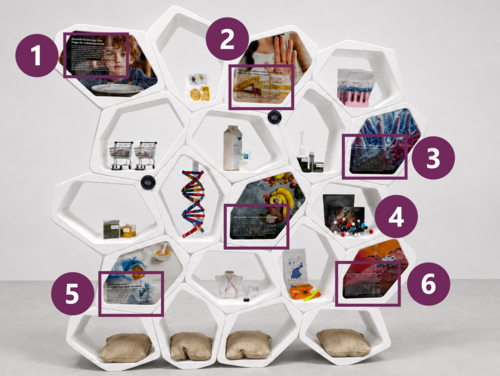

Healthy eating is not just a matter of discipline or knowledge, but also of living conditions. Many people, especially children and adolescents in households at risk of poverty, have limited access to healthy foods. The University of Hohenheim is therefore investigating the nature of material and social food poverty in Germany, the factors that influence it, and its consequences for food security, health, and quality of life.
But worldwide, too, many people lack essential nutrients such as iron and zinc. New approaches in Hohenheim research are therefore attempting to make foods themselves more nutrient-rich by studying nutrient uptake and storage in plants and breeding new plant varieties (e.g., beans), so that people in affected regions can obtain more iron and zinc from their staple foods.
Research:

For many people, eating means making sacrifices: intolerances to gluten, lactose, or histamine make everyday life complicated and stressful. Researchers at the University of Hohenheim are working to change that—by developing foods that are easier to digest. The focus is on what triggers symptoms in the body and how these processes can be influenced. With the help of enzymes, problematic ingredients are to be specifically broken down or modified. This could lead to foods that those affected can tolerate better without having to strictly avoid certain foods.
At the same time, it is clear that the challenges are not only biological. Especially after a diagnosis, such as with celiac disease, many struggle with uncertainty, emotional stress, and consistently adhering to their diet in daily life. Food safety also plays a crucial role. Studies show that even gluten-free products can contain traces of gluten—a risk that needs to be further reduced. The goal: foods that are not only safer but also noticeably simplify daily life and give those affected more freedom when it comes to eating.
Research:
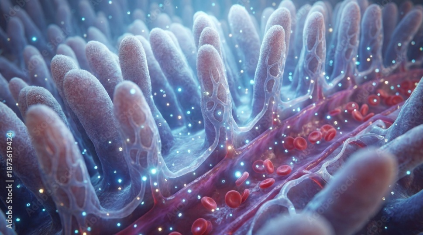
Superfoods are associated with the promise of a particularly healthy diet: rich in omega-3 fatty acids, antioxidants, and other valuable nutrients. However, what matters is not just what a food contains, but how much of it actually reaches the body. This is precisely where research at the University of Hohenheim comes in. Under the term “bioavailability,” researchers are investigating how nutrients are absorbed, transported, and become effective. One focus is on microalgae as a sustainable and nutrient-rich food source of the future. They contain, among other things, omega-3 fatty acids, carotenoids, and proteins with potentially health-promoting properties. Using microalgae as an example, researchers are investigating how these substances are absorbed by the body and what effects they have on, for instance, gut health or inflammatory processes. At the same time, the research examines how nutrients actually enter our body’s cells. The goal is to develop foods in such a way that health-promoting ingredients become more readily available. In doing so, the research combines nutritional science and cell biology and lays the foundation for a new generation of functional foods.
Research:
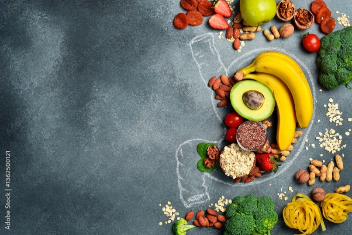
Daily life, environment, and the body all play a role in healthy eating. Being overweight doesn’t just happen overnight, and there’s no single solution to fix it. That’s why researchers at the University of Hohenheim are studying how biological, individual, and social factors interact.
One focus is on obesity. Researchers are developing and testing prevention and treatment strategies and investigating which factors contribute to successful long-term weight loss—from diet and exercise to quality of life and individual needs. The perspective of those affected is also central to this work: What kind of support do they want? And how must programs be designed so that they truly work in everyday life? The researchers aim to lay the groundwork for effective measures that make healthy eating possible for everyone.
Research:
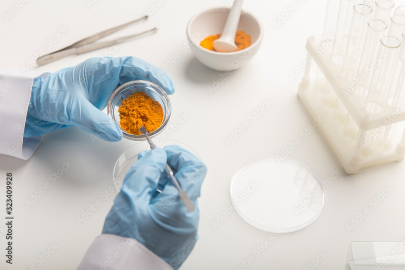
Diet influences our health right down to the activity of our genes. At the University of Hohenheim, scientists are therefore investigating how plant-based compounds can regulate genetic processes without altering the DNA itself. The focus is on cancer prevention and treatment. Certain bioactive substances, such as those found in broccoli, turmeric, or green tea, can activate genes that have a protective effect. Natural compounds such as flavonoids from hops and high-dose vitamin C are also being studied to influence tumor growth and specifically modulate immune responses.
A particular focus is on women’s health. Women with genetic risk factors have a significantly increased risk of breast and ovarian cancer. However, research shows that lifestyle factors such as diet and exercise can influence this risk. For example, a large intervention study is investigating how physical activity and a Mediterranean diet affect cancer risk.
The goal is to develop personalized approaches that specifically help women actively influence their individual health risks.
Research:

From environmental factors to cellular mechanisms: Many diseases arise from a complex interplay of various influences. Research at the University of Hohenheim focuses precisely on this area, examining different clinical pictures to gain a comprehensive understanding of their causes and to be able to intervene in a targeted manner. One example is tick-borne encephalitis (TBE), an infection transmitted by ticks. Researchers are analyzing why certain regions have an increased risk of infection and how the spread can be contained.
At the same time, the focus is on processes within the body: How do inflammations develop, and how do they progress? Using modern methods, researchers are able to visualize the proteins involved in inflammatory reactions and thus track inflammatory processes more precisely. This allows for better recognition of different clinical pictures and the development of new, more precise approaches to prevention and treatment.
Research: