
How do we move towards the Agriculture of the Future?
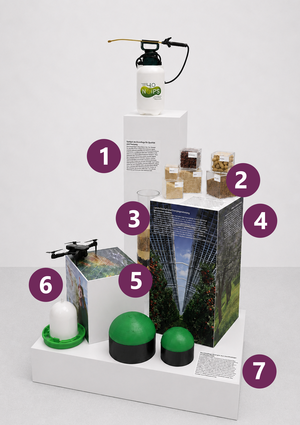
Every plant begins with a seed. The seed portfolio highlights the wide variety of agricultural crops: from traditional cereals and legumes to oilseeds, as well as special or heritage varieties. This diversity forms the basis for the breeding and further development of crops. Researchers at Hohenheim have investigated which characteristics are particularly important for cultivation, quality and utilisation. In addition to harvest and ingredients, the question of how plants can be utilised as fully as possible also plays a role, for example as food, animal feed or for energy production in biogas plants. In this way, plant diversity gives rise to new solutions for food, agriculture and a bio-based economy.
Lentils, soya, chickpeas, quinoa, amaranth, peanuts and old grain varieties offer a diverse range of new and traditional crops. Research is being carried out at the University of Hohenheim to identify which plants and varieties are particularly well adapted to sustainable agriculture. The focus is not only on yield, but also on quality. The research focuses on important ingredients such as proteins, starch, oils and other valuable components that are crucial for nutrition, processing and utilisation. The researchers are also comparing different varieties under various growing conditions, thus laying the foundations for an agricultural system that is more diverse, more resilient and better adapted to future challenges across a wide range of locations.
How can agricultural production be combined with renewable energy? One option is agricultural photovoltaic systems, in which solar panels are installed on agricultural land in such a way that crops can still be grown and the land cultivated beneath them. Research is investigating the conditions under which this dual use is beneficial. This involves not only electricity generation, but also its effects on plants, soil, the water balance and the microclimate. Solar panels can, for example, provide shade and thus help to better protect crops from heat and drought stress. This is giving rise to new approaches to agriculture that more closely integrate food production, climate protection and a sustainable energy supply.
Apples are some of the most important fruits in Germany and come in a wide variety. Alongside modern commercial fruit farms, traditional orchards also play a vital role: they preserve old varieties, provide habitats for numerous animal and plant species, and at the same time shape our cultural landscape. Researchers at Hohenheim are investigating how apple cultivation can be made sustainable. Their work focuses on questions such as which varieties are particularly robust, how yield and quality can be ensured, and how the use of plant protection products can be reduced. The importance of mixed orchards for biodiversity, landscape conservation and regional value creation is also a key focus. The research thus demonstrates how modern fruit growing and the preservation of traditional cultivation systems can contribute to a diverse and sustainable agricultural sector.
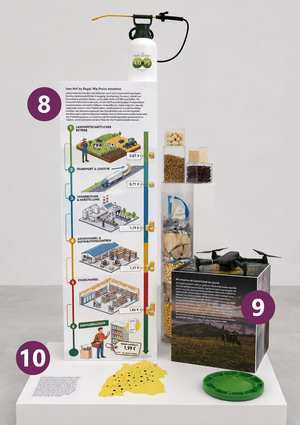
In modern agriculture, digital technologies are increasingly being used to observe plant populations more closely and manage work processes in a more targeted way. Drones equipped with cameras and sensors, as well as robotic systems, help to map fields with precision and highlight variations within a field. Research is being conducted in Hohenheim into how these technologies can be used to identify weather risks at an early stage, provide more specific care for crops and reduce the use of inputs. There is a particular focus on plant protection: rather than treating entire areas uniformly, weeds can be identified and treated mechanically or technically with precision. The aim is to establish a form of agriculture that combines digital innovation, soil protection and efficient management in order to achieve stable yields and ensure a more sustainable approach to the environment.
A diet tailored to their needs and good housing conditions are crucial for healthy animals. Researchers at Hohenheim are therefore investigating how animal feeding, health and welfare of animals can be better aligned. A key focus is on new protein feeds derived, for example, from grass or other native plants. Such approaches can help to utilise resources more regionally and reduce dependence on imported animal feed. At the same time, housing systems, barn climate, enrichment and animal observation play an important role in the well-being of pigs, chickens and cattle. The aim is to establish animal farming practices that take performance, animal health and environmental impacts into account together, thus contributing to more sustainable production systems.
In biogas plants, organic material is converted into usable energy. Plants, farm manure or agricultural residues, for example, can be used for this purpose. The plant produces biogas, which can be used to generate electricity and heat or further processed into fuel. Research is being carried out in Hohenheim to determine which plants and residues are particularly well suited to biogas production. In addition to traditional energy crops, flowering plants are also coming into focus. They not only provide biomass but can also offer food and habitat for insects. In this way, energy production is combined with agricultural use, resource conservation and biodiversity. The aim is to develop systems that provide renewable energy whilst better adapting to varied, sustainable agricultural landscapes.
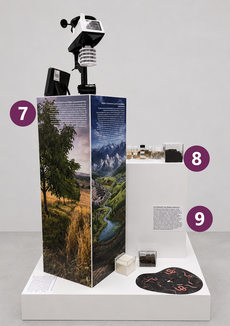
Phosphorus is an essential nutrient for plants. It plays a key role in the growth of roots, flowers and fruits, as well as in supplying the plant with energy. In agriculture, phosphorus is therefore frequently applied to fields in the form of phosphate fertilisers. This sets an important nutrient cycle in action. Plants absorb phosphorus through their roots and store it in their fruits, amongst other places. It then enters human and animal metabolism via plant-based foods and animal feed. Some of this phosphorus returns to the fields via organic residues such as manure, compost or fermentation waste. At the same time, however, a significant proportion is lost, for example via wastewater and sewage sludge, through soil erosion or unused residues. Nevertheless, phosphorus is still extracted from mineral sources, the mining of which is associated with environmental impacts. This is where research in Hohenheim steps in: it is investigating how phosphorus can be recovered from residual and waste streams and reused as fertiliser. The aim is to keep the nutrient in the cycle for as long as possible, to reduce the demand for mineral phosphate, to minimise losses and to safeguard soil fertility in the long term.
Soil improver made from biochar
Fertilizer made from Biogas Digestate
Compost
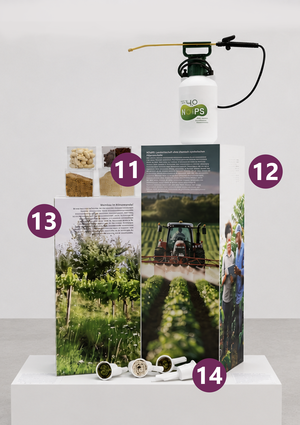
Straw, wood waste, wool and other by-products from agriculture and the food industry are more than just waste. In a sustainable bioeconomy, they can be used as valuable raw materials, for example in soil improvers, insulation materials, packaging, textiles or new bio-based products. At the University of Hohenheim, research is being conducted into the valuable characteristics of these raw materials. This highlights just how diverse the raw materials are and how much potential they hold. At the same time, researchers are investigating how such residues can be put to the best possible use, for example as activated carbon or as bio-based fertilisers for fields and gardens. This opens up new ways of keeping resources in circulation and replacing fossil-based raw materials.
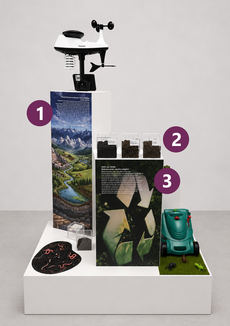
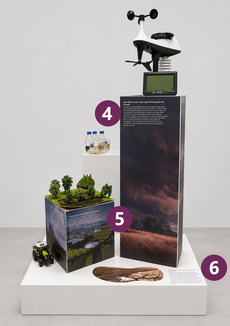
Researchers at the University of Hohenheim are investigating the relationship between weather, climate and agricultural land use. Using modern monitoring systems, they measure temperature, humidity, wind, precipitation and solar radiation directly in the field. This data helps to understand the effects of heat, drought or heavy rainfall on plants, soils and crop yields. At the same time, they are recording how landscape features such as trees, hedges and open fields influence the local climate. In this way, the research provides a vital foundation for an agricultural sector that can better cope with the consequences of climate change whilst protecting resources, yields and ecosystems.
Researchers at the University of Hohenheim are investigating how agricultural landscapes respond to heat, drought, heavy rainfall and other consequences of climate change. Their findings show that it is not just individual fields, but the overall structure of the landscape that is crucial. Large, uniformly used areas often offer less protection against extreme weather. Diverse landscapes with hedges, trees, flower-rich areas and green strips, on the other hand, can retain water, slow down the wind, provide shade and connect habitats. The researchers at Hohenheim are investigating how these landscape elements can work together. This lays the foundations for agricultural landscapes that are more resilient to extreme weather, offer more space for biodiversity and provide food.
Heat, drought, heavy rainfall and new pesticides are changing the conditions for agriculture. To ensure that farms can continue to achieve stable yields in the future, there is a need for farming systems that are both more resilient and more resource-efficient. Researchers at Hohenheim are therefore investigating robust vegetables and crops, more diverse crop rotations, ridge cultivation, and plants such as miscanthus, which can help to reduce erosion. Methods involving fewer synthetic chemical pesticides and the use of biological solutions are also being considered. In this way, climate-resilient agriculture that secures yields, protects soils and reduces environmental impact is being specifically encouraged.
Trees on agricultural land are more than just marginal greenery: In agroforestry systems, they are combined with farming or grassland to protect the climate, soil and biodiversity. They provide shade, break the wind, store carbon and help retain water in the landscape. At the same time, their roots stabilise the soil and create habitats for insects, birds and other animals. Researchers at the University of Hohenheim are investigating how such systems can be planned and managed so that they are ecologically effective whilst also being agriculturally useful. The aim is to create more diverse agricultural landscapes that produce food, promote biodiversity and are better adapted to heat, drought and heavy rainfall.
Sheep's wool is a renewable raw material that is not only suitable for making clothing. It can also be used in insulating materials or as a natural flame retardant, thus opening up new applications in a bio-based economy. In Hohenheim, scientists are researching how such animal by-products can be better utilised and processed. This allows natural raw materials to remain in the cycle for longer and replace fossil-based or synthetic materials. Livestock farming can therefore not only provide food, but also serve as a starting point for innovative, sustainable products.
What is considered waste today could become a valuable contribution to healthy soils tomorrow. Researchers are currently investigating how mineral phosphate and bio-based phosphorus sources can be put to good use in agriculture. Mineral phosphate comes from natural deposits, whilst bio-based phosphates can be recovered from organic waste materials. The key factors are how well plants can absorb the nutrients they contain and what effect the substances have on the soil, plant growth and the environment. Bio-based phosphorus soil amendments can help close nutrient cycles and keep soils fertile in the long term. At the same time, research is showing under which conditions recycled or bio-based fertilisers can represent a sustainable alternative to mineral-based fertilisers.
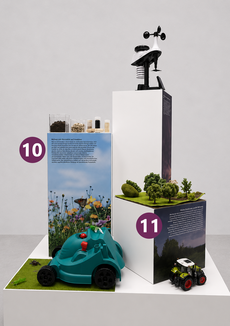
Meadows are essential habitats for wild bees, butterflies, bugs, and many other insects. To ensure they can provide these creatures with food, shelter and refuge, it is not only crucial whether an area is mowed, but also when and how this is done. If areas are mowed too frequently, too early, or across the entire area at once, flowering plants and vital refuges disappear. Researchers at the University of Hohenheim are therefore investigating insect-friendly mowing approaches, such as later mowing dates, mowing in sections or leaving strips of flowering plants unmown. The research shows that even small changes in management practices can help to promote biodiversity and establish a stronger link between agricultural use and insect conservation.
How can an agricultural landscape be designed to produce food while protecting biodiversity, the climate and the soil? At the University of Hohenheim, landscape models are being used to investigate how fields, hedges, trees, flower-rich areas and other elements interact. Such models highlight the consequences of different decisions. Hedges, solitary trees and refuge areas, for example, help insects and other animals to find food and spread out. At the same time, they can protect soil, store water and improve the microclimate. In this way, individual fields are transformed into diverse agricultural landscapes that produce food, protect species and are prepared for climate change.